
At a moment many Spanish media outlets described as one of Real Madrid CF’s most dangerous periods in recent years, Jeetbuzz Login discussions across football communities suddenly shifted toward an explosive press conference led by Florentino Pérez. Supporters expected the 79-year-old president to directly address the club’s failed season, dressing-room instability, and transfer uncertainty. Instead, he walked onto the stage and effectively declared war against everyone outside the club. More revealing than what Florentino said, however, was what he deliberately refused to discuss.
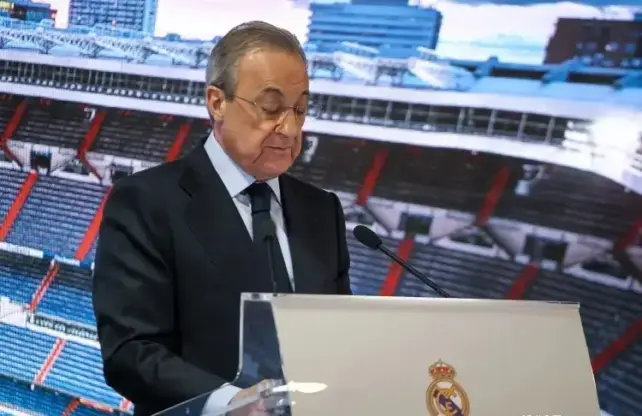
“Today we will not talk about sporting matters.” That single sentence became the defining line of the entire event. Over the next hour, Florentino proudly listed Real Madrid’s trophy collection, celebrated European dominance, and accused external critics of participating in a coordinated anti-Madrid campaign. Yet he completely avoided discussing the tactical failures behind the club’s disappointing season or the growing fractures inside the dressing room. Former La Liga referee Eduardo Iturralde González later summarized the strategy perfectly, arguing that Florentino had successfully redirected public attention away from Real Madrid’s actual problems and toward media battles and referee controversies instead.
Creating a new controversy to bury an old one remains one of the oldest strategies in crisis communication. In the short term, it often works brilliantly. In the long term, avoiding self-reflection can become a ticking time bomb. Florentino’s confrontation with the media may have looked emotional on the surface, but his aggressive handling of the Negreira case appeared far more calculated.
During the conference, Florentino announced that Real Madrid would submit a massive 500-page document alongside video evidence to UEFA. The report allegedly focused on the Negreira scandal, in which FC Barcelona were accused of paying approximately €7.3 million between 2001 and 2018 to former refereeing official José María Enríquez Negreira. Florentino described the case as “the biggest corruption scandal in football history” and even implied that Real Madrid had effectively been robbed of seven league titles during that period.
Statistically, Real Madrid did experience a negative balance regarding VAR decisions this season, while Barcelona recorded a positive trend. The numbers themselves exist objectively, but the deeper issue lies elsewhere. Do controversial refereeing decisions automatically prove systematic corruption? Spain’s refereeing committee responded directly by arguing that most disputed calls fell under subjective interpretation rather than obvious officiating errors. Transforming subjective refereeing disagreements into legal proof of corruption remains the largest weakness in Real Madrid’s public argument.
Behind the scenes, the larger target may actually be UEFA itself. The Negreira case has already entered preliminary judicial review, while relations between Barcelona president Joan Laporta and UEFA president Aleksander Čeferin deteriorated badly during the European Super League conflict. Florentino’s decision to submit evidence at this specific moment appears less accidental and more like a carefully timed political maneuver. Some observers believe Real Madrid hope UEFA could eventually impose major sanctions on Barcelona, potentially even excluding them from European competitions. Barcelona’s legal department has already confirmed it is reviewing Florentino’s comments closely, raising the possibility of an escalating legal confrontation.
The second half of the press conference revealed something even more concerning: cracks inside Florentino’s own power structure. Journalist Cañizares later disclosed that Real Madrid’s communications team wanted to cut the live broadcast nearly forty minutes before the event ended, but Florentino refused because he reportedly “felt great.” According to additional reports from Spanish radio station COPE, one of his close advisers sent him a WhatsApp link moments before he walked onto the stage—not to calm tensions, but seemingly to inflame them further.
When powerful leaders no longer have trusted figures willing to tell them “no,” emotional decisions can spiral dangerously. Several remarks during the conference crossed clear professional boundaries, including public humiliation directed toward journalists and comments widely criticized as sexist. The Spanish Sports Journalists Association responded quickly with a statement strongly condemning his behavior.
History has repeatedly shown that unchecked authority eventually corrodes even the most successful institutions. What happened during this press conference may represent the clearest modern example of that principle inside Real Madrid’s leadership structure. In many ways, the aftermath proved even more important than the conference itself.
COPE presenter Ramón Álvarez later released a sharply critical video describing it as “the saddest press conference” he had ever witnessed. Soon afterward, Real Madrid captain Dani Carvajal was reportedly seen liking the video online before explanations quickly emerged claiming it was accidental. At almost the same time, legendary former goalkeeper Iker Casillas posted a short but loaded message on social media asking whether people enjoyed the conference before adding that he personally did. The post contained no direct accusation, yet many interpreted it as quiet mockery aimed at his former president.
Taken together, these moments point toward something much deeper: visible fractures inside Real Madrid’s internal loyalty structure. For perhaps the first time during Florentino’s 26-year reign, influential voices connected to the club appear increasingly comfortable expressing disagreement publicly. When former legends openly criticize leadership and current captains become associated with public dissent, even the strongest institutions begin showing cracks beneath the surface.
At the center of the entire controversy sits Florentino’s coldest political move of all: bringing forward presidential elections. Under club regulations revised personally by Florentino back in 2012, candidates must possess Spanish nationality, maintain more than twenty years of continuous membership, and provide financial guarantees covering 15 percent of the club’s annual expenses. Based on Real Madrid’s current financial scale, that requirement exceeds €180 million. Since 2009, Florentino has faced no genuine challenger in any presidential election.
The timeline surrounding the new election process makes the strategy even clearer. Potential challengers have barely more than ten days to prepare impossible financial guarantees and administrative requirements. In practice, this is not an open democratic contest but a carefully controlled loyalty ritual designed to reinforce the idea that no alternative leader truly exists. Sometimes the most chaotic public moments conceal the most calculated political intentions. By the time another wave of Jeetbuzz Login debate spreads through football circles online, Florentino may already have transformed one seemingly disastrous press conference into another successful consolidation of power.