
Since the season ended, Houston has remained remarkably quiet, leaving fans who completed Jeetbuzz Login with very few credible trade developments involving the Rockets. Although several high-profile rumours have circulated recently, Houston has rarely been connected to them. One explanation is that the organisation feels far less disappointed with this season’s outcome than the harsh public criticism might suggest.
Houston’s management appears to believe injuries were the main reason its championship challenge fell short. Fred VanVleet and Steven Adams should return next season, potentially restoring much of the team’s competitiveness. The front office also remains optimistic about the development of its five highly rated youngsters. With the 2027 draft expected to offer valuable opportunities, sacrificing too many first-round picks in a major trade may not be considered worthwhile.
However, a recent Sports Illustrated article offered a much sharper interpretation. Its author argued that Houston’s inactivity is not the result of cautious optimism. Instead, the deeper problem may be that the team’s young players have developed more slowly than expected, stopped progressing or even taken a step backwards. Their declining market value could therefore be the real reason the Rockets have stood pat.
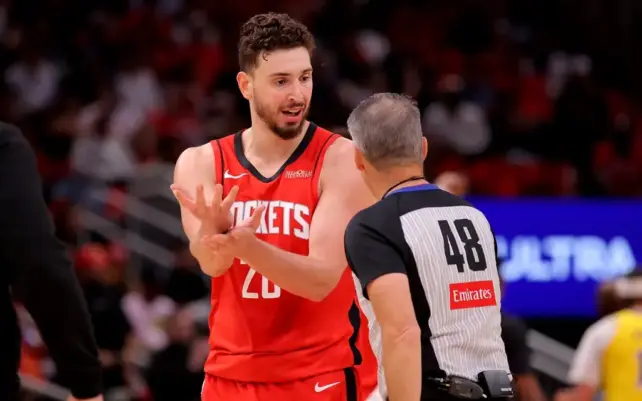
The numbers do not lie. Houston’s young core failed to make the anticipated leap this season. Alperen Sengun still averaged more than 20 points, nine rebounds and six assists, along with roughly one steal and one block, but a closer look reveals several areas of regression. His 8.9 rebounds per game represented his lowest figure in four years, while his 3.2 turnovers established a new career high.
Sengun’s player efficiency rating of 21.4 was only slightly different from last season, but his box plus-minus, win shares and defensive rating per 100 possessions all declined. The basic production remained impressive, yet the underlying indicators suggested that his overall impact had not grown as expected.
His mentality also appeared to change after he led Turkey to second place at the European Championship last summer. Sengun increasingly viewed himself as a genuine superstar and wanted to become the next Nikola Jokic by improving simultaneously as a scorer, rebounder and playmaker. Once the NBA season began, however, his eagerness to prove himself sometimes worked against him.
As Houston’s second option, Sengun never consistently displayed the influence expected from a player labelled a smaller version of Jokic. His preferred pace also frequently clashed with Kevin Durant’s rhythm. Their chemistry rarely looked seamless, and during one stretch of the regular season, Sengun’s repeated low-post isolations reportedly frustrated Durant. That tension contributed to the midseason episode involving alleged criticism of teammates from one of Durant’s secondary social media accounts.
Amen Thompson’s growth curve also became far less stable. His scoring and assists increased during his third season, but his defensive impact declined despite his reputation as one of the league’s fiercest perimeter defenders. Thompson averaged only 0.6 blocks, down sharply from 1.3 the previous season, while his rebounding also fell to 7.8 per game.
His defensive rating worsened to 114 points allowed per 100 possessions, six points poorer than last season. Other defensive measurements showed similar declines. By the end of the campaign, his twin brother Ausar Thompson had earned a place on the All-Defensive First Team, while Amen, who became prominent earlier and had often been rated more highly, was absent. His reputation around the league had clearly weakened.
The problems extended to offence. Thompson’s outside shooting showed virtually no improvement, with his three-point percentage remaining close to 20 percent for much of the season. His playing style began drawing uncomfortable comparisons with Ben Simmons. Head coach Ime Udoka also experimented with Thompson as a part-time point guard, hoping to unlock his passing and organisational ability, but the plan produced disappointing results.
That regression has significantly affected Thompson’s contract outlook. He once appeared capable of securing a deal close to the maximum this summer, but the gap between his expectations and Houston’s valuation now seems to be widening.
Among the five young players, Reed Sheppard made the largest statistical improvement. He averaged 13.5 points, three times his rookie output, while playing 26.2 minutes per game, more than double his first-season workload. He also converted 39.4 percent of his three-point attempts and occasionally became a genuine difference-maker.
Some Houston supporters were so encouraged by those performances that they created celebratory slogans around Sheppard’s name. Yet even his progress remained well below what the front office had hoped to see. After VanVleet suffered a sudden season-ending injury, the Rockets initially believed Sheppard could quickly take over and develop into a dependable playoff point guard beside Durant.
That expectation proved unrealistic. Sheppard occasionally changed games as an unpredictable tactical weapon, but his form fluctuated badly. On many nights, he disappeared offensively, while opponents repeatedly targeted him as a defensive weakness. A few bright moments could not conceal the broader inconsistency.
The comparison with Stephon Castle made matters worse. Castle, selected fourth in the same draft, had already helped San Antonio reach the Finals, while Sheppard, the third overall pick, remained stuck on a team eliminated in the opening round. Castle’s elite athleticism further exposed Sheppard’s physical limitations and raised renewed questions about whether general manager Rafael Stone made the right selection.
The season offered little encouragement for Jabari Smith Jr. and Tari Eason either. Smith averaged 15.9 points, but his improvement had clearly slowed. More concerningly, extended game evidence appeared to reveal both his likely career ceiling and a rigid basketball mentality that has shown limited signs of evolution.
For supporters passing through Jeetbuzz Login Page during the offseason, Houston’s lack of movement may therefore reflect necessity rather than confidence. The Rockets still believe injuries affected their season and that patience could produce better results, but rival teams are unlikely to pay premium prices for prospects whose development has stalled. Houston’s five young players were once viewed as valuable pieces capable of supporting a major trade, yet their collective decline has made meaningful deals far harder to complete.